
Choosing the right dressing table wall light requires balancing aesthetic appeal with precise optical performance. While many decorative lighting brands focus purely on the exterior design of a fixture, vanity lighting demands strict technical specifications to ensure accurate color rendering, even light distribution, and shadow-free illumination. To find the ideal brand and fixture, homeowners must look beyond marketing claims and evaluate critical engineering details, safety certifications, and physical compatibility with their dressing space.
By understanding the technical requirements of vanity lighting, you can confidently navigate the offerings of various lighting manufacturers. This guide outlines the essential optical standards, brand evaluation frameworks, technical specifications, and safety protocols needed to select a reliable wall light that elevates both your daily grooming routine and your interior decor.
Key Lighting Requirements for Dressing Table Vanities
To achieve accurate makeup application and grooming, vanity lighting must meet specific optical standards. The most critical factor is how the light source renders colors. The Color Rendering Index (CRI) measures a light source’s ability to reveal the true colors of objects, skin tones, and cosmetics compared to natural daylight. For a dressing table, look for fixtures with a CRI rating of Ra 90 or higher. A high CRI ensures that foundation shades, lipsticks, and eyeshadows are applied accurately, preventing the mismatched tones that often occur under low-quality, low-CRI lighting.
Products mentioned in this guide
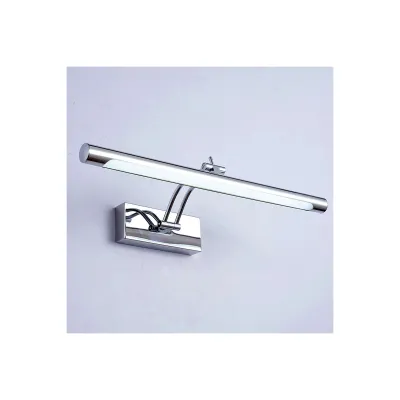
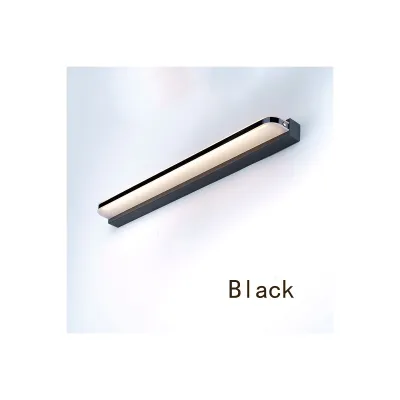
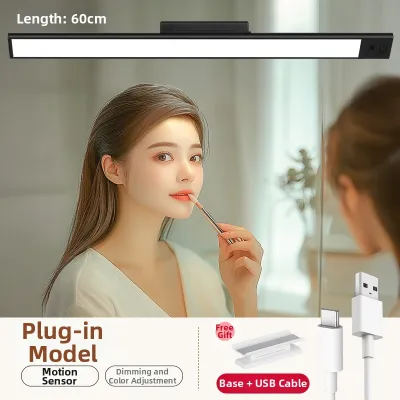
Prices are valid at publication and may change. Please refer to the product page for the latest price.
Correlated Color Temperature (CCT) is another vital consideration, as it dictates the warmth or coolness of the light. For grooming tasks, a neutral white light ranging between 3000K and 4000K is highly recommended. Light in this spectrum closely mimics natural daylight without being overly warm or clinical. Warm white light (around 2700K) can cast an excessively yellow hue over the face, making it difficult to judge skin tones accurately. Conversely, cool white light (above 5000K) can introduce a harsh blue cast, highlighting imperfections flatly and making the grooming experience uncomfortable.
Light distribution and diffusion are equally important for minimizing harsh facial shadows. Direct, unshielded light sources create deep shadows under the eyes, nose, and chin, which complicates precise makeup application. To avoid this, select wall lights equipped with high-quality diffusers, such as frosted glass, opal glass, or specialized polycarbonate covers. These materials scatter the light evenly, creating a soft, wrap-around illumination that mimics the flattering effect of professional studio lighting.
Fixture placement and beam angles also play a decisive role in shadow reduction. Positioning a pair of wall lights on either side of the vanity mirror provides balanced, bilateral illumination across the entire face. If you are using a single horizontal fixture above the mirror, ensure it features a wide beam angle and a downward-facing diffuser to distribute light evenly across your face rather than casting shadows downward from the forehead.
How to Evaluate Wall Light Brands for Vanity Use
When searching for the right dressing table wall light, it is helpful to distinguish between specialized architectural lighting brands and general home decor brands. Architectural lighting manufacturers focus heavily on optical engineering, thermal management, and driver quality. Their fixtures often feature high-performance light engines designed for color accuracy and longevity. General home decor brands, on the other hand, prioritize aesthetic trends and exterior finishes. While their designs may be visually striking, they may utilize basic light sockets or lower-grade integrated LEDs that lack the color precision required for vanity tasks.

To evaluate a brand’s reliability, examine the build materials used in their fixtures. High-quality brands construct their wall lights from durable metals such as solid brass, anodized aluminum, or stainless steel. These materials not only offer a premium aesthetic but also serve as effective heat sinks for integrated LED systems. Proper thermal management is crucial; if an LED fixture cannot dissipate heat efficiently, the light output will degrade rapidly, and the lifespan of the internal components will be severely shortened.
In Singapore, verifying local electrical safety certifications is a critical step when evaluating lighting brands. Mains-powered electrical fixtures and their associated LED drivers should carry the Safety Mark. This certification indicates that the product has undergone rigorous testing to comply with local safety standards, reducing the risk of electrical faults, short circuits, or overheating. Avoid purchasing unbranded or uncertified fixtures from unregulated online marketplaces, as they often bypass these essential safety checks.
Finally, assess the brand’s warranty terms and the long-term availability of replacement parts. Because many modern wall lights feature integrated LED modules rather than traditional screw-in bulbs, replacing a failed light source is not always straightforward. Reputable brands typically offer multi-year warranties on both the fixture housing and the internal LED driver. Furthermore, established manufacturers are more likely to supply replacement drivers or compatible LED modules years after purchase, ensuring your vanity lighting setup remains functional without requiring a complete fixture replacement.
Essential Specifications to Check Before Buying
Before finalizing your purchase of a dressing table wall light, you must verify several technical specifications to ensure compatibility with your home’s electrical system and physical layout. Start by checking the voltage requirements and driver specifications. Most integrated LED wall lights operate on low-voltage direct current (DC) and require an LED driver to convert the standard 230V alternating current (AC) mains power. Ensure the fixture includes a compatible driver that fits within the wall cavity or the fixture’s mounting canopy.
Physical dimensions must be carefully matched to your vanity setup. Measure the available wall space on either side of your mirror, taking into account any decorative frames or nearby cabinetry. The wall lights should not protrude so far forward that they interfere with your movement or strike you when you lean toward the mirror. Additionally, check the mounting bracket dimensions to ensure they can be securely anchored to your wall without overlapping the mirror frame or electrical junction boxes.
If you plan to install a dimmable lighting system, you must verify dimmer switch compatibility. LED dimming is highly sensitive and requires precise matching between the LED driver and the wall dimmer switch. The two most common residential dimming methods are leading-edge (TRIAC) and trailing-edge (electronic low voltage, or ELV) dimming. Trailing-edge dimming is generally preferred for modern LED fixtures as it offers smoother dimming curves and minimizes the risk of annoying flickering or audible buzzing. Always check the manufacturer’s specification sheet to confirm which dimming protocol the fixture supports.
| Specification | Recommended Standard | Purpose |
|---|---|---|
| Color Rendering Index (CRI) | Ra 90 or higher | Ensures accurate color representation for cosmetics |
| Color Temperature (CCT) | 3000K to 4000K (Neutral White) | Mimics natural daylight without harsh blue or yellow tones |
| Dimming Protocol | Trailing-edge (ELV) or DALI | Provides smooth, flicker-free brightness adjustment |
| Ingress Protection (IP) | IP20 (Dry areas) or IP44 (Near wet zones) | Protects against moisture and dust ingress |
Consider the environmental conditions of your dressing area. If your dressing table is located inside a bathroom, in an en-suite, or in a high-humidity zone, you must check the fixture’s Ingress Protection (IP) rating. An IP44 rating is typically recommended for fixtures installed near water sources or in humid environments, as it protects the internal electrical components from splashing water and moisture ingress. For dressing tables located in dry bedroom areas, a standard IP20 rating is sufficient, though the metal finishes should still be treated to resist tarnishing in humid tropical climates.
Installation and Safety Considerations for Vanity Lights
Proper installation is essential to ensure both the physical stability and electrical safety of your dressing table wall lights. Before mounting any fixture, inspect the wall structure to determine the appropriate anchoring method. Heavy decorative wall lights, particularly those made of solid brass or thick glass, require robust structural support. If you are mounting the fixtures onto drywall or partition walls, locate the timber studs or use specialized heavy-duty hollow-wall anchors. For solid brick or concrete walls, high-quality masonry plugs are necessary to prevent the fixture from pulling loose over time.
When planning the electrical layout, you must decide between concealed wiring and plug-in alternatives. Concealed wiring offers a clean, seamless look with no visible cables, but it requires routing electrical wires behind the wall. This process may involve chasing concrete walls or running cables through drywall cavities, which can be disruptive and require plaster patching and repainting. If structural modifications are not feasible, some brands offer plug-in wall lights featuring decorative textile cords. While easier to install, plug-in models require a nearby electrical outlet and visible cable management to maintain a tidy appearance.
Working with fixed electrical wiring carries inherent risks of severe electrical shock, fire, and damage to your home’s electrical system. In Singapore, any modification, extension, or installation of fixed electrical wiring must be carried out by a licensed electrical worker (LEW) or a qualified professional electrician. Attempting to wire mains-powered fixtures yourself can void product warranties, compromise home insurance coverage, and violate local building regulations.
Before any electrical work or inspection begins, ensure that the power supply to the relevant circuit is completely isolated. Turn off the corresponding miniature circuit breaker (MCB) at your home’s main distribution board (DB box) and verify that the circuit is dead using a reliable voltage tester. Do not rely solely on the wall switch to isolate the power, as improper wiring configurations can leave live current running to the fixture even when the switch is in the off position.
Frequently Asked Questions (FAQ)
Can I use smart bulbs in dressing table wall lights?
Yes, you can use smart bulbs in dressing table wall lights, provided the fixture features a standard bulb socket, such as an E27 or E14 base, and has sufficient physical clearance inside the shade. Smart bulbs are often larger and heavier than traditional incandescent or basic LED bulbs, so it is essential to verify the internal dimensions of the fixture’s shade before purchasing.
However, you must avoid connecting smart bulbs to a circuit controlled by a traditional wall dimmer switch. Lowering the voltage via a wall dimmer will cause smart bulbs to flicker, lose their wireless connection, or suffer permanent internal damage. For optimal performance, keep the wall switch in the fully on position and use a compatible smart remote, app, or voice control to adjust the brightness.
The primary benefit of using smart bulbs in a vanity setting is the ability to adjust the color temperature. You can set a crisp, neutral white light (around 4000K) for morning grooming and makeup application, and then transition to a soft, warm white light (around 2700K) in the evening to create a relaxing ambiance in your bedroom.
How high should wall lights be mounted above a dressing table?
For side-mounted vanity wall lights, the center of the light source should ideally be positioned at eye level. For an average user, this is approximately 1.5 to 1.7 meters from the finished floor level. Positioning the lights at eye level ensures that the illumination is distributed evenly across your face, eliminating the harsh upward or downward shadows that complicate grooming.
If you are mounting a single horizontal light bar above the mirror, the fixture should be positioned roughly 2 to 2.1 meters above the floor. Ensure the light source is directed downward and properly diffused to prevent direct glare from reflecting off the mirror and into your eyes.
Always adjust these measurements based on your specific setup. Sit at your dressing table stool and note your eye level relative to the mirror before drilling any mounting holes. The goal is to position the light sources so they provide comprehensive illumination across your face while remaining just outside your direct line of sight to prevent uncomfortable glare.

Community discussion
Share your experience or ask a question. Comments are reviewed before publication.