
Selecting the right Braun clock requires balancing your daily routine with the physical and aesthetic demands of your living space. The brand’s iconic design language—pioneered by legendary designer Dieter Rams—focuses on functional clarity, ensuring that every dial, button, and hand serves a distinct purpose. To find the perfect match for your home, you must evaluate where the clock will sit, how you interact with it throughout the day, and whether you prefer the classic sweep of an analog hand or the precise readout of a digital interface.
How to Quickly Identify Your Ideal Braun Clock Category
To narrow down your choices, start by defining your primary use case and the environmental conditions of the room. A clock’s performance is highly dependent on its surroundings, meaning a model that excels on a sunlit living room wall may not be suitable for a dark, quiet bedroom.
Begin by evaluating two core decision axes: room environment and primary function. Room environment involves assessing ambient lighting levels and your sensitivity to noise. For instance, a bedroom requires a completely silent mechanism and a display that does not emit disruptive light. Primary function dictates whether you need the clock for waking up, passive timekeeping, or workspace productivity.
Products mentioned in this guide
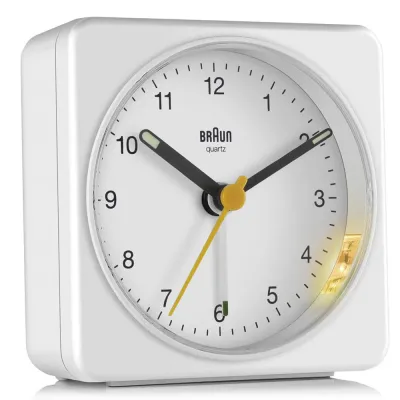
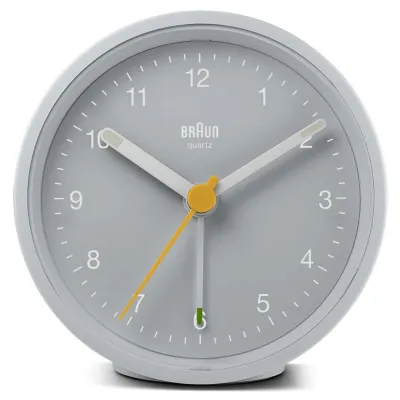
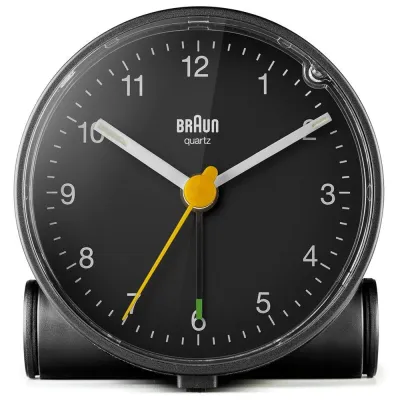
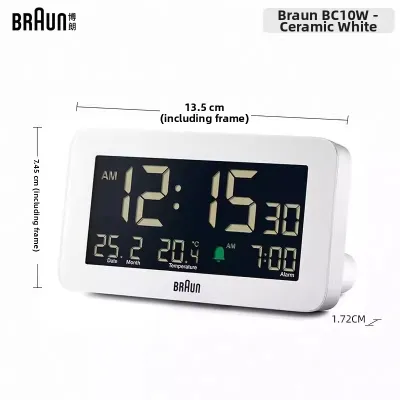
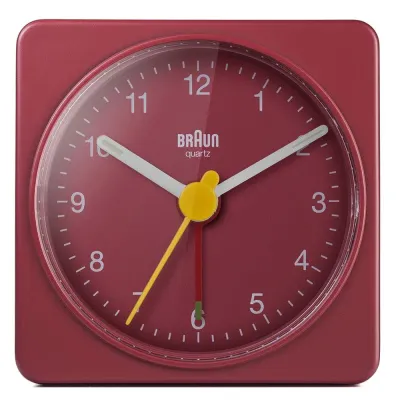
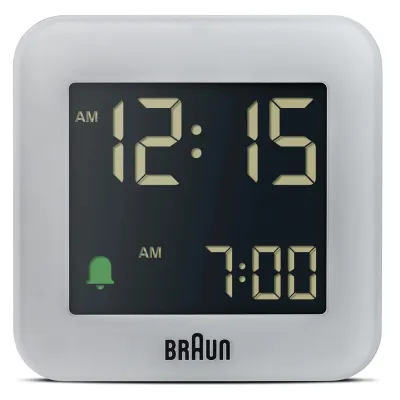
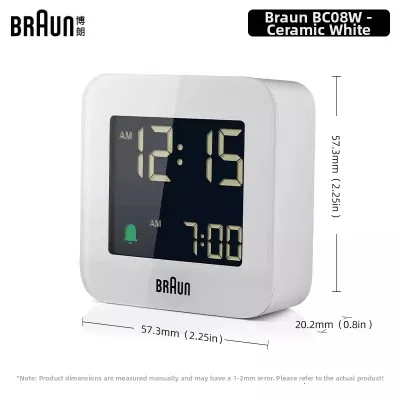
Prices are valid at publication and may change. Please refer to the product page for the latest price.
Braun’s design philosophy centers on intuitive layouts and minimal ornamentation. This means you do not have to navigate complex menus or decipher cluttered dials to perform basic tasks. The brand’s offerings generally fall into three main categories: compact bedside alarms, large wall clocks, and highly portable travel clocks. Identifying which category aligns with your immediate needs simplifies the selection process before you look at specific design variations.
Matching Clock Features to Your Room and Environment
A clock is not a standalone decorative object; its utility is defined by its physical environment and your proximity to it. A desk clock sits within arm’s reach, demanding tactile controls, while a wall clock must remain legible from several meters away.

Choosing a Clock for the Bedroom
Bedrooms demand sensory peace to support healthy sleep routines and gentle waking. The most critical feature to verify for a bedside clock is a silent movement. Traditional ticking sounds can easily disrupt light sleepers in the quiet of the night. When browsing analog models, look for those explicitly specified as having “sweep” or “silent quartz” movements, which allow the second hand to glide smoothly without audible ticking.
Alarm functionality and display brightness are equally important. In the dark, you should be able to operate the alarm intuitively without fumbling. Look for models with large, top-mounted snooze buttons or touch-activated sensors. For digital displays, ensure the clock features a customizable backlight or a continuous low-light sensor that only illuminates when the room is dark, preventing unwanted light pollution.
Selecting a Statement Piece for the Living Room
In a shared living area, a clock serves as both a functional timekeeper and a design statement. Wall clocks are the natural choice for these larger spaces, where the primary requirement is legibility from a distance. High-contrast dials—such as bold black hands on a clean white face, or crisp white markings on a matte black dial—ensure you can read the time at a glance from across the room.
Consider the visual weight of the clock within your existing decor. A minimalist clock should complement your furniture, shelving, and wall art rather than dominating the visual space. Frameless designs or slim-bezel models blend seamlessly into modern, Scandinavian, or transitional interiors. If you prefer a table clock for a sideboard or mantelpiece, choose a larger model with a stable, weighted base.
Picking a Functional Desk Clock for the Workspace
A workspace clock is a tool for focus and productivity. It should sit comfortably within your peripheral vision, allowing for quick time checks without causing visual distraction. A compact footprint is essential to preserve valuable desk space alongside your computer, keyboard, and documents.
Readability during deep work sessions is key. Digital models that display both the time and secondary information, such as the date or ambient temperature, can help you track your schedule without needing to check your phone, which often introduces digital distractions. If you prefer an analog aesthetic, choose a clean dial with minimal branding to keep your visual environment uncluttered and professional.
Evaluating Daily Functional Needs: Alarms, Displays, and Power
Understanding the technical features of different clock models ensures that your choice aligns perfectly with your daily habits and sensory preferences.
Alarm Mechanisms
Waking up is a sensory experience, and the type of alarm mechanism you choose can set the tone for your entire day. Standard alarms can be jarring, which is why many modern clocks feature progressive alarms, also known as crescendo alarms. These alarms start with a gentle, slow beep and gradually increase in frequency and volume if they are not deactivated. Tactile snooze buttons are vital for ease of use; look for large, easily accessible buttons on the top or front of the casing. Some advanced models even offer motion-activated snooze features, allowing you to wave a hand over a sensor to temporarily silence the alarm.
Display Types
The choice between analog and digital displays shapes how you interact with time. Analog dials offer a classic, spatial representation of time that is easy to process at a glance. They often feature the iconic yellow second hand, which provides a subtle pop of color and a nod to classic design heritage. Digital displays offer absolute precision, showing exact hours, minutes, and sometimes seconds. Contrast is key when selecting a display: black dials with white markings offer a sleek, modern look but may require more ambient light to read, while white dials with black markings remain the gold standard for high-contrast legibility in all lighting conditions.
Power Sources
Power delivery affects both placement flexibility and functionality. Battery-operated models, typically using AA or AAA batteries, offer complete portability and a clean, cable-free aesthetic. This makes them ideal for bedside tables, floating shelves, and travel. However, they require periodic battery replacements to maintain accuracy. Mains-powered options, which connect directly to an electrical outlet, provide a continuous, reliable power supply. This is often necessary for digital clocks with bright, always-on backlights or integrated radio features. When selecting a mains-powered model, verify that the power adapter matches local electrical standards and plug types, or opt for a model powered via a standard USB interface.
Integrating Minimalist Design into Your Existing Decor
Minimalism is not just about what is missing; it is about the deliberate placement of essential elements. Braun’s design language relies on clean lines, geometric shapes, and uncluttered dials. The signature yellow second hand or green alarm switch serves as a functional accent, guiding your eye directly to the clock’s interactive elements.
Before purchasing, measure your physical space carefully. For wall clocks, check the wall clearance and ensure there is enough visual “breathing room” around the clock so it does not look cramped. For desk or bedside clocks, measure the shelf or table depth. A clock that is too deep may sit precariously close to the edge, risking accidental drops.
Match the casing material and finish to your room’s existing hardware. Matte black or matte white plastic casings offer a clean, contemporary look that pairs well with modern furniture. Metallic finishes or brushed bezels add a touch of industrial elegance, making them suitable for offices or transitional living rooms with metal accents.
Pre-Purchase Checklist: Dimensions, Power, and Movement Verification
To ensure your new clock integrates perfectly into your home, run through this verification checklist before finalizing your purchase:
- Dimensions and Weight: Measure the exact height, width, and depth of the intended spot. For wall-mounted clocks, verify the weight and ensure your wall anchors or hooks are rated for the load. If you are renting, check if your tenancy agreement allows drilling; if not, look for lightweight models that can be safely hung using high-quality adhesive hooks.
- Power and Battery Requirements: Confirm the exact battery type required, such as alkaline AA or AAA. Avoid using heavy-duty or rechargeable batteries unless explicitly recommended by the manufacturer, as they can sometimes deliver inconsistent voltage that affects timekeeping accuracy. For mains-powered models, verify compatibility with the local 230V power supply and check the cable length to ensure it reaches your nearest power outlet without stretching.
- Movement Type: Do not assume all analog clocks are completely silent. Check the product specifications for terms like "sweep movement" or "silent quartz." Standard quartz movements may produce a faint, rhythmic ticking sound that is highly noticeable in a quiet bedroom.
- Warranty and Authenticity: Purchase only from authorized retailers to ensure you receive an authentic product. Authentic clocks come with manufacturer warranties that cover electronic and mechanical defects. Verify the warranty terms and the location of the authorized service center for peace of mind.
Frequently Asked Questions (FAQ)
How do I clean and maintain the casing and dial of a minimalist clock?
Routine maintenance keeps your clock looking pristine. Use a dry, clean, lint-free microfiber cloth to gently dust the casing and the dial cover. For stubborn smudges on matte plastic or metallic finishes, slightly dampen the microfiber cloth with water. Never use harsh chemical cleaners, solvents, alcohol, or abrasive pads, as these can permanently strip the matte coating, cloud the acrylic dial cover, or seep into the internal movement. Always consult the manufacturer’s care instructions for specialized finishes.
What should I do if the analog clock hands are misaligned or the time is inaccurate?
If your clock begins to lose time or the hands appear misaligned, the most common culprit is a low battery. Replace the existing battery with a fresh, high-quality alkaline battery. If you need to adjust the time, always use the designated setting wheel or knob on the back of the clock. Never force the hands directly with your fingers, as this can bend the delicate metal hands or strip the internal plastic gears of the quartz movement. If the hands remain misaligned or the clock continues to run slow after a battery change, contact an authorized service center or the manufacturer for professional repair.

Community discussion
Share your experience or ask a question. Comments are reviewed before publication.