
Upgrading your home or commercial property to energy-efficient lighting often begins with a transition to T8 LED tubes. However, selecting the correct t8 led tube holder—commonly referred to as a tombstone—requires a clear understanding of your fixture’s wiring and physical requirements. Choosing the wrong holder configuration can lead to installation failures, electrical short circuits, or ineffective light distribution.
To determine which holder type you need, you must assess how your new LED tubes receive power, verify whether your existing sockets are shunted or non-shunted, and decide if your space requires adjustable beam angles. By matching these physical and electrical requirements, you can ensure a safe, efficient, and long-lasting lighting upgrade.
Understand Your Fixture's Power Configuration: Single-End vs. Double-End
Before purchasing a new t8 led tube holder, you must identify how your chosen T8 LED tube is designed to receive electrical power. Unlike traditional fluorescent lamps that rely on a high-voltage ballast to strike an arc through gas, LED tubes operate on low-voltage direct current managed by an internal or external driver. When retrofitting existing fixtures, this driver is typically powered directly by your mains voltage, which in Singapore is standard at 230V AC. This direct-wire setup is categorized into two distinct configurations: single-end power and double-end power.
Products mentioned in this guide
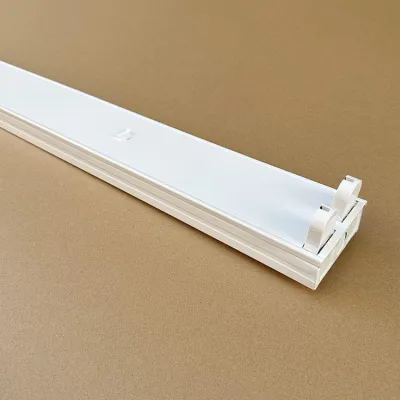
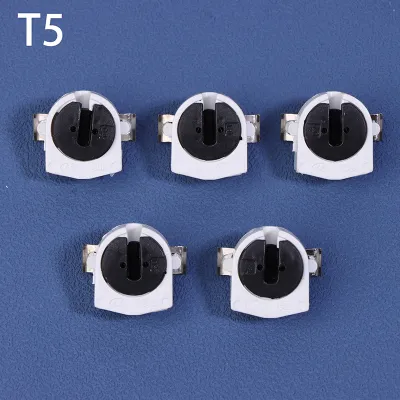
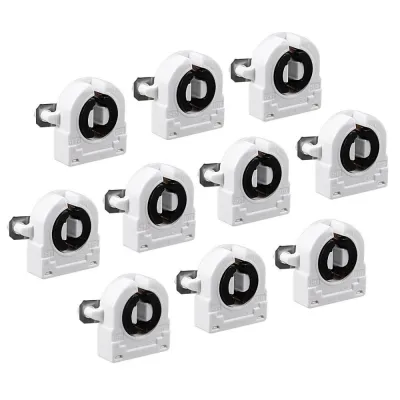
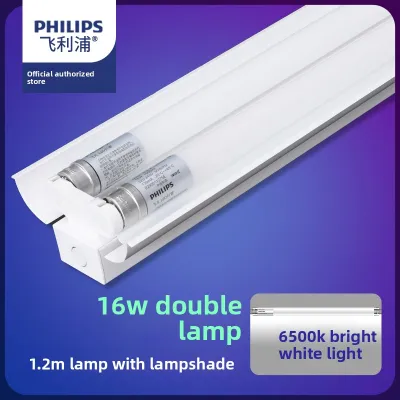
Prices are valid at publication and may change. Please refer to the product page for the latest price.
Single-end powered (SEP) LED tubes require both the Live (L) and Neutral (N) connections to be delivered to a single side of the tube. The two pins on this active end connect directly to the internal driver. The opposite end of the tube has pins that are purely decorative and non-conductive, serving only to physically anchor the tube into the holder. This configuration is widely used because it simplifies the rewiring process to a single side of the light fixture, leaving the other side completely unpowered.
Double-end powered (DEP) LED tubes, on the other hand, receive the Live connection on one end of the tube and the Neutral connection on the opposite end. This layout closely mimics the physical path of traditional fluorescent systems, although the ballast itself is completely bypassed. Because power must travel from one end of the fixture to the other, both ends of the fixture must have active, properly wired holders to complete the circuit.
Your choice of T8 LED tube holder must physically and electrically align with these configurations. Attempting to install a single-end tube into a fixture wired for a double-end configuration—or vice versa—will prevent the light from functioning and can damage the internal driver.
Working with 230V mains voltage carries inherent risks of severe electrical shock and fire. Before inspecting your fixture’s internal wiring or removing any components, you must isolate the circuit by turning off the main circuit breaker at your distribution board. Because identifying and altering internal fixture wiring requires technical competence, you should rely on a qualified, licensed electrician to perform any actual rewiring or ballast-bypass work.
Inspect Your Existing Sockets: Shunted vs. Non-Shunted T8 LED Tube Holders
Once you know your tube’s power configuration, you must inspect the internal electrical construction of your existing holders. T8 tombstones are divided into two categories: shunted and non-shunted. Although they look identical from the outside, their internal metal contacts handle electrical current in completely different ways.

Shunted Holders
Shunted holders feature internally connected electrical contacts. The two pin entry points on the tombstone are joined together by an internal metal jumper, creating a single electrical path. Because the pins are connected, any current entering the holder is split equally between both pins. Shunted holders are typically found in older fixtures equipped with instant-start electronic ballasts. In an LED retrofit, they are highly compatible with single-end direct-wire setups, where they can safely receive a single electrical line (either Live or Neutral) and distribute it to both pins on the active end of the tube.
Non-Shunted Holders
Non-Shunted holders keep the two internal metal contacts completely separated. This design provides two independent electrical paths, one for each pin of the tube. Non-shunted holders are required for double-end direct-wire installations, as well as single-end setups where the active holder must feed Live to one pin and Neutral to the other pin on the same side.
Mismatch Risks
Using a shunted holder in a scenario that requires a non-shunted holder is highly dangerous. If you install a single-end powered LED tube (which expects Live on one pin and Neutral on the other pin at the same end) into a shunted holder, the internal metal shunt will connect the Live and Neutral lines directly together. The moment you turn on the light switch, this creates a direct short circuit, which will instantly trip your home’s main circuit breaker and potentially damage the fixture or the LED tube.
Testing Your Sockets
To safely verify whether your existing holders are shunted or non-shunted, you can perform a quick continuity test using a digital multimeter. First, ensure the fixture is completely disconnected from the mains power supply. Remove the T8 tube from the fixture. Set your multimeter to the continuity or resistance mode (often indicated by a sound wave or diode symbol).
Insert one probe into the left pin slot of the holder and the second probe into the right pin slot of the same holder. If the multimeter emits a continuous beep or shows a resistance value close to zero, the holder is shunted. If the multimeter remains silent or displays “OL” (Open Loop), the holder is non-shunted. If you are unfamiliar with using a multimeter or feel unsure about the readings, stop immediately and consult a professional electrician.
Evaluate the Need for Rotatable Holders or Endcaps
Standard T8 fluorescent tubes emit light in a 360-degree pattern, relying on external fixture reflectors to bounce light downward. In contrast, T8 LED tubes are directional, typically projecting light in a beam angle of 120 to 180 degrees. While this directionality makes LEDs highly efficient, it also means that the physical orientation of your t8 led tube holder dictates exactly where the light will shine.
In many older fixtures, the tombstone sockets are mounted at fixed angles that do not point directly downward. If you install a standard LED tube into these fixed sockets, the light may end up projecting sideways or upward into the fixture housing, severely reducing the usable light in your room. To solve this, you can install rotatable holders, or choose T8 LED tubes that feature built-in rotatable endcaps.
Rotatable holders allow you to physically twist the tube after it has been locked into the socket. This mechanical flexibility lets you adjust the direction of the LED chip array, ensuring the light is directed precisely where you need it. This feature is highly beneficial in specific architectural and task-lighting scenarios:
- Wall Washing: Directing light toward a wall to highlight artwork, textures, or architectural features.
- Display Cabinets: Angling the light downward and backward to eliminate shadows on shelves.
- Cove Lighting: Directing light upward and outward against a curved ceiling to create soft, indirect ambient light.
- Asymmetrical Reflectors: Aligning the beam with specialized reflectors to optimize light spread in commercial spaces.
Before opting for rotatable components, you must evaluate the physical clearance inside your light fixture. Measure the distance between the center of the socket and the fixture’s outer housing, diffuser cover, or any adjacent tubes. Rotatable holders and tubes with rotatable endcaps often have a slightly bulkier profile than standard fixed models. You must ensure the tube can rotate through its full range (typically 90 to 180 degrees) without hitting the cover or binding against the fixture frame. Because these adjustable mechanisms introduce extra moving parts, they should only be selected when directional adjustment is a verified requirement for your space.
Your Step-by-Step Diagnostic and Upgrade Path
To safely navigate your T8 LED retrofit, follow this logical diagnostic and installation checklist. This structured approach ensures you select the correct holder and avoid hazardous wiring errors.
Step 1: Power Down and Verify
Locate your home’s main distribution board (DB box) and switch off the circuit breaker dedicated to the lighting circuit you are working on. Use a reliable non-contact voltage tester at the light fixture itself to verify that the electrical lines are completely dead before touching any components.
Step 2: Perform a Visual Inspection
Remove the outer diffuser or cover of your light fixture to expose the internal wiring. Identify whether the fixture currently uses a magnetic ballast (identifiable by the presence of a small, cylindrical starter) or an electronic ballast. Trace the wires running from the mains input terminal block to the ballasts, and then to the tombstones on either end.
Step 3: Test the Holders for Continuity
With the power safely isolated, use a digital multimeter to test the existing tombstones. Place the probes into the pin slots of each holder to determine if they are shunted or non-shunted. Label each holder with a piece of tape indicating its type to avoid confusion during rewiring.
Step 4: Match with Your LED Tube Specifications
Review the installation manual of your new T8 LED tube to confirm its electrical requirements.
- If your tube is single-end powered, you will need a non-shunted holder on the active end if you are wiring Live and Neutral to separate pins on that single side. Alternatively, you can use a shunted holder if the tube's wiring instructions specify a single-line input on that end.
- If your tube is double-end powered, you must ensure both ends of the fixture use non-shunted holders, with Live wired to one end and Neutral wired to the other.
Step 5: Execute the Upgrade or Replacement
If your existing holders do not match the electrical requirements of your new LED tubes, or if they show signs of physical deterioration—such as yellowing, cracking, or brittleness caused by years of heat exposure from old fluorescent lamps—you must replace them. Unclip the old tombstones from the fixture bracket, disconnect the wires, and snap the new, compatible holders into place.
Because modifying fixed electrical wiring, bypassing ballasts, and replacing mains-connected holders involves working with 230V electricity, it is strongly recommended to hire a licensed electrical professional in Singapore. A licensed electrician will ensure that all modifications comply with local electrical safety standards, utilize proper wire gauges, and feature secure, insulated connections, protecting your property from electrical fires and ensuring long-term reliability.
Frequently Asked Questions (FAQ)
Can I use a double-end powered T8 LED tube in a single-end wired fixture?
No, attempting to use a double-end powered T8 LED tube in a single-end wired fixture will not work and is highly dangerous. A double-end tube is designed to receive Live voltage at one end and Neutral at the opposite end. If you place it into a fixture wired for single-end power, the tube will fail to illuminate because the electrical circuit cannot be completed across the length of the tube. Furthermore, attempting to force this connection can lead to a short circuit, damage the tube’s internal driver, or trip your main circuit breaker. The fixture’s wiring and holders must match the tube’s power design.
Is it safe to bypass the fluorescent ballast myself?
Bypassing a fluorescent ballast involves cutting the existing wires, removing the magnetic or electronic ballast from the circuit, and wiring the t8 led tube holder directly to your 230V mains power supply. This task should not be attempted as a DIY project unless you have formal electrical training and appropriate testing equipment. Incorrect wiring can lead to immediate short circuits, electrical shocks, or fire hazards. To ensure your installation is safe, secure, and fully compliant with Singapore’s electrical safety codes, you should hire a licensed electrical worker to perform the bypass.
Do I need to replace the holders if I switch from fluorescent to LED?
Whether you need to replace your existing holders depends on their electrical compatibility and physical condition. If your current tombstones are non-shunted and match the requirements of your new direct-wire LED tube, you can safely reuse them. However, if your new tube requires a different holder type (such as switching to a setup that requires non-shunted sockets when you currently have shunted ones), replacement is mandatory. Additionally, older fluorescent fixtures often have brittle, heat-damaged holders that can crack during installation; replacing these worn components ensures a secure mechanical and electrical connection.

Community discussion
Share your experience or ask a question. Comments are reviewed before publication.