
Prolonged reading, whether from a physical book or a digital screen, places a significant physiological demand on our eyes. When we read under inadequate or poorly designed light, the ciliary muscles within our eyes must work overtime to maintain focus. This constant strain often leads to asthenopia—commonly known as eye strain—which manifests as headaches, blurred vision, and dry eyes. The latter is frequently exacerbated by the dry, air-conditioned environments typical of modern Singapore homes and offices. Choosing a high-quality reading light is one of the most effective ways to mitigate this fatigue and protect your long-term visual health.
In the modern task lighting landscape, three brands—Xiaomi, Philips, and BenQ—have emerged as prominent contenders. Each brand approaches eye protection through distinct engineering philosophies, material choices, and price points. While one brand may focus on cutting-edge smart home integration, another might prioritize advanced optical physics to eliminate screen glare, while the third leverages decades of traditional lighting heritage to deliver broad, uniform illumination. Understanding these technical nuances is essential for selecting a reading light that aligns with your specific reading habits and workspace setup.
Quick Answer: Which Brand is Best for Long Reading Sessions?
The ideal reading light depends heavily on your primary reading medium, desk layout, and budget. There is no single universal winner, as each brand has engineered its products to address specific user scenarios and environments. To make an informed decision, you must evaluate how you consume text and how much desk space you have available.
Products mentioned in this guide
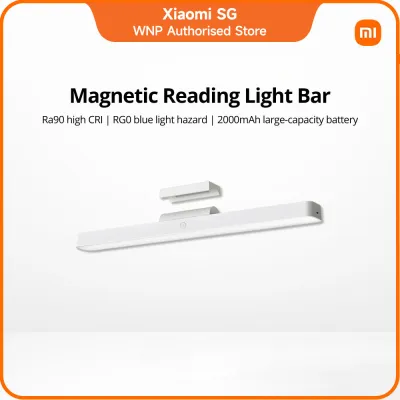
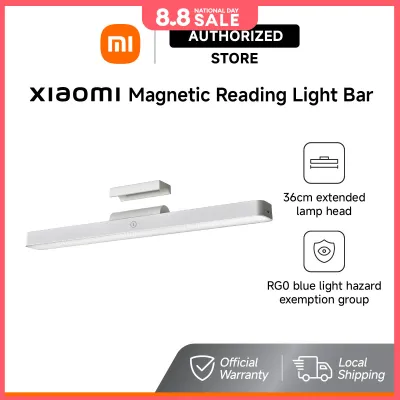
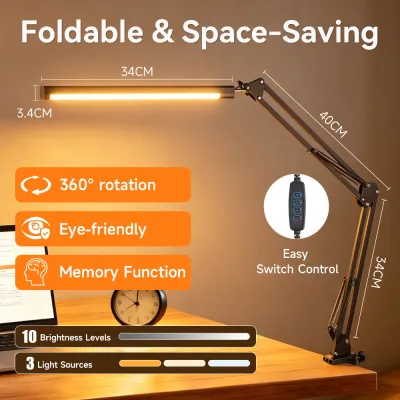
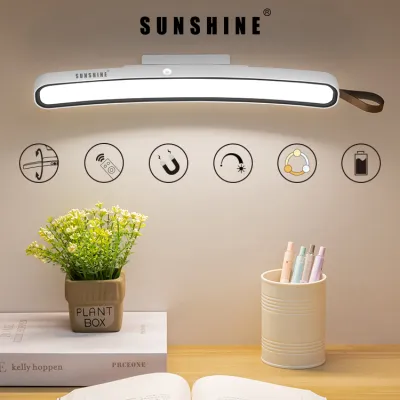
Prices are valid at publication and may change. Please refer to the product page for the latest price.
BenQ is the premier choice for digital reading and mixed-media setups. Its asymmetric optical designs project light precisely onto the desk without reflecting off screens, though this premium engineering comes at a higher price point. If you spend hours reading on monitors, tablets, or e-readers, BenQ’s specialized optics provide the most effective defense against screen-induced eye strain.
Philips is the optimal selection for traditional readers who primarily consume physical books, textbooks, or documents spread across a wide desk. The brand leverages its extensive optical heritage to deliver wide, highly uniform light fields that minimize harsh contrasts. This makes it an excellent choice for students and professionals who study or write for extended periods.
Xiaomi serves as the best option for budget-conscious users who value minimalist design and smart home integration. While highly capable, users must carefully verify the specific optical certifications of individual Xiaomi models, as performance can vary between their entry-level and premium tiers. It offers a highly functional, cost-effective entry into dedicated task lighting.
Essential Eye Protection Metrics to Check Before Buying
To evaluate these brands objectively, it is essential to understand the technical standards that govern eye protection in task lighting. Relying on brand names alone is insufficient; instead, you should look for specific certifications and performance metrics on product labels and manufacturer manuals.

Flicker and Blue Light Management
Standard alternating current (AC) cycles can cause LEDs to modulate rapidly if the driver circuitry is cheap. While invisible to the naked eye, this rapid modulation forces the pupillary sphincter muscles to constantly adjust, leading to neurological fatigue and headaches. Look for “flicker-free” or “low-flicker” certifications, such as IEEE PAR 1789 compliance, which ensures the modulation frequency is high enough to be safe for the human eye. Premium reading lights utilize high-quality Direct Current (DC) dimming drivers to eliminate flicker entirely across all brightness levels.
Blue light hazards are another critical consideration. Photobiological safety standards, such as IEC 62471, categorize light sources into Risk Groups (RG0 to RG3). Risk Group 0 (RG0) represents the safest tier, indicating no photobiological blue light hazard even under continuous, long-term exposure. Choosing an RG0-certified lamp is vital for late-night reading sessions, as high-energy blue light can suppress melatonin production and disrupt your sleep cycle.
Illuminance Uniformity and Glare Control
The human eye adapts to the average brightness of the visual field. If a lamp creates a bright hotspot on a book while the surrounding desk is dark, moving your eyes back and forth forces constant adaptation, leading to pupillary fatigue. A uniformity ratio close to 1 (such as 1:1.5 or 1:2) ensures a smooth transition of light across your entire workspace. The recommended illuminance for reading is typically between 500 and 750 lux, which should be spread evenly across the task area.
Glare is another major source of discomfort. Direct glare occurs when light shines straight into the eye, while reflected glare happens when light reflects off glossy paper or screens. High-quality lamps use physical baffles, honeycomb diffusers, or polarized lenses to direct light away from the reader’s direct line of sight and minimize reflections. Look for Unified Glare Rating (UGR) specifications in the manufacturer’s manual; a UGR of less than 19 is recommended for comfortable reading.
Color Rendering Index (CRI) and Color Temperature
A Color Rendering Index (CRI, or Ra) of 90 or above is crucial for reading, as it ensures that text contrast is sharp and colors are rendered accurately. Low CRI makes black text on white paper look muddy or grey, reducing contrast and forcing the reader to squint or lean closer. For reading physical books with illustrations or colorful diagrams, a high CRI is essential for visual clarity.
Adjustable color temperature (CCT) is vital for supporting natural circadian rhythms. During daytime focus sessions, a cooler light (around 4000K to 5000K) helps maintain alertness. In the evening, shifting to a warmer light (around 2700K to 3000K) reduces blue light exposure and signals to the brain that it is time to wind down. Ensure the lamp you select offers a wide, adjustable CCT range.
Brand Positioning: Xiaomi vs Philips vs BenQ
Each of these three brands approaches task lighting with a distinct design philosophy, target audience, and engineering focus.
Xiaomi: Smart Integration and Value
Xiaomi focuses on clean, minimalist aesthetics and deep integration with the Mi Home ecosystem. This allows users to control brightness and color temperature via mobile applications, set automated timers, or sync the lamp with other smart home devices. For those on a budget, Xiaomi offers an accessible entry point into dedicated task lighting, often utilizing sleek white plastic and aluminum profiles that fit seamlessly into modern, minimalist decors.
However, it is essential to verify the specific dimming mechanism of the model you are considering. Some entry-level Xiaomi models utilize stepped dimming rather than smooth, stepless adjustment, which can limit your ability to find the exact comfortable brightness level for your environment. Additionally, budget models may feature plastic joints that wear out faster over time, so checking the physical build quality is recommended before purchase.
Philips: Optical Heritage and Broad Coverage
Philips brings decades of traditional lighting expertise to the table. Their design philosophy centers on physical optical comfort, often utilizing proprietary lens designs like honeycomb structures or dual-reflector arrays. These designs are engineered to refract and distribute light over a very wide area, making them highly effective for large desks where physical books and notebooks are spread out.
When evaluating a Philips reading light, pay close attention to the physical footprint of the lamp base. Because these lamps are built to provide broad, stable coverage, their bases and articulating arms can be quite large and heavy, requiring a dedicated amount of desk space. Always verify the physical dimensions to ensure the lamp fits comfortably alongside your reading materials without cluttering your workspace.
BenQ: Premium Ergonomics and Asymmetric Light
BenQ has carved out a specialized niche by focusing on high-end ergonomic design and asymmetric optical engineering. Unlike traditional lamps that cast a symmetrical cone of light, BenQ’s monitor light bars and premium desk lamps utilize custom-curved reflectors to direct light forward and down at a precise angle. This ensures the light illuminates your workspace while completely bypassing your monitor screen, eliminating glare and reflections.
The build quality of BenQ lights typically features robust materials like sandblasted aluminum and heavy-duty zinc alloys, designed for long-term durability. However, this premium engineering comes with a higher price tag. Before purchasing, verify the compatibility of their mounting clamps or bases with your specific desk thickness or monitor bezel design to ensure a secure installation.
Decision Framework: Match the Brand to Your Reading Setup
To make an informed purchase, match your specific reading habits and desk environment to the strengths of each brand.
Choose Xiaomi if:
- You have a compact desk: The minimalist, slim profiles of Xiaomi lamps are ideal for small workspaces where a bulky lamp would feel intrusive.
- You prefer smart home automation: If you want to automate your lighting, such as scheduling automatic dimming sequences or setting Pomodoro timers to remind you to take eye breaks, Xiaomi's ecosystem integration is unmatched.
- You are budget-conscious: Xiaomi offers high functional value at a lower price point, making it an excellent entry-level option.
Choose Philips if:
- Your primary focus is physical reading: If you spend hours reading textbooks, novels, or documents spread across a spacious desk, Philips's wide, uniform light field is ideal.
- You prioritize established optical technologies: Philips's honeycomb lenses and glare-reduction designs are proven to create a soft, comfortable reading environment.
- You prefer physical controls: If you want a traditional, reliable desk lamp with intuitive physical buttons rather than relying on smartphone apps, Philips is a dependable choice.
Choose BenQ if:
- You read on digital screens: If you frequently use monitors, tablets, or e-readers, BenQ's asymmetric light bars are essential for eliminating screen reflections and glare.
- You require flexible ergonomics: BenQ's heavy-duty articulating arms allow you to position the light source at precise heights and angles, adapting to various tasks.
- You view it as a long-term investment: If you have a larger budget and value premium materials, robust build quality, and advanced optical engineering, BenQ is worth the premium.
Verify First if:
- Buying from third-party online marketplaces: If you are purchasing from online marketplaces rather than official brand stores in Singapore, always cross-check the exact model numbers. Brands often sell multiple product tiers, and a basic model may look identical to a premium model but lack critical eye-protection features like stepless dimming, high CRI, or certified flicker-free drivers.
Electrical Safety and Setup Checks for Singapore Homes
Integrating a new reading light into your home requires attention to local electrical standards to ensure safety and prevent damage to the device.
Voltage and Plug Compatibility
Singapore operates on a 230V, 50Hz electrical system, utilizing Type G (three-pin rectangular) plugs. If you are purchasing a reading light, verify that the plug and voltage ratings are compatible with this standard. Importing a lamp designed solely for 110V grids without a proper voltage converter can cause immediate electrical failure or pose a fire hazard.
Power Adapters vs. Direct Plug
Many modern reading lights, particularly those from Xiaomi and certain Philips models, utilize external power adapters. Always check the input label on the adapter itself; it should state “Input: 100-240V” to confirm wide-voltage compatibility. If the lamp is a direct-plug model imported from a region with different standards, it may require a new, locally certified power cord. Always consult the manufacturer’s manual if the power requirements are unclear.
Safety Mark
For peace of mind and compliance with local safety regulations, look for the Enterprise Singapore Safety Mark on the power supply unit or plug. This mark indicates that the electrical component has been tested and certified safe for use in Singapore homes, which is especially important for high-wattage desk lighting or lamps left on for extended periods.
Installation and Maintenance Safety
While these are portable desk lamps rather than fixed-wiring fixtures, safety precautions still apply. Always isolate the power supply by unplugging the lamp before replacing bulbs, cleaning the optical lenses, or adjusting tight mechanical joints. If you ever encounter damaged cords, flickering that persists across different power outlets, or unusual heat coming from the adapter, discontinue use immediately and consult a qualified professional or the manufacturer for repair.
Frequently Asked Questions (FAQ)
Do I need a dedicated reading light if I have good ceiling lighting?
Yes, a dedicated reading light is highly beneficial. Ceiling lights are designed to provide ambient illumination, which spreads light evenly across an entire room but often casts shadows when you lean forward over a book or desk. This ambient setup can also create harsh reflections on digital screens. A dedicated reading light provides focused task lighting, allowing you to control the direction, intensity, and color temperature of the light. By illuminating your reading material directly and reducing the contrast strain between your book and the immediate surroundings, a task light significantly lowers visual fatigue during long sessions.
How far should the reading light be placed from my book or screen?
As a general ergonomic guideline, the light source should be positioned above and slightly to the side or behind your line of sight to prevent direct glare from entering your eyes. For physical reading, the lamp head should typically sit around 30 to 50 centimeters above the desk surface, angled so that light sweeps across the page without reflecting directly into your face. For digital screens, if you are using an asymmetric light bar, it should be mounted directly on top of the monitor, adjusted so that the light beam cuts off right at the edge of the screen bezel. Always consult your specific model’s manufacturer manual for optimal placement distances, as different optical designs have unique distribution patterns.

Community discussion
Share your experience or ask a question. Comments are reviewed before publication.